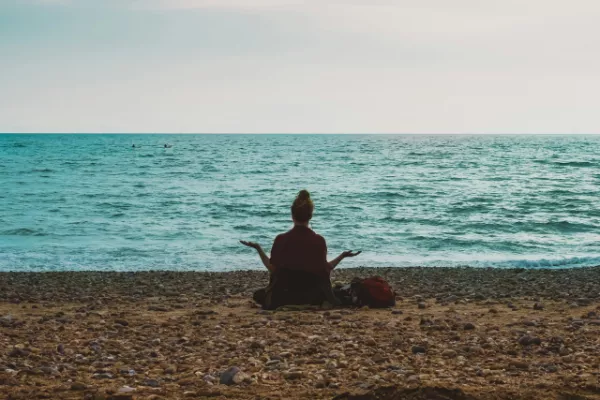
What is a yoga retreat?
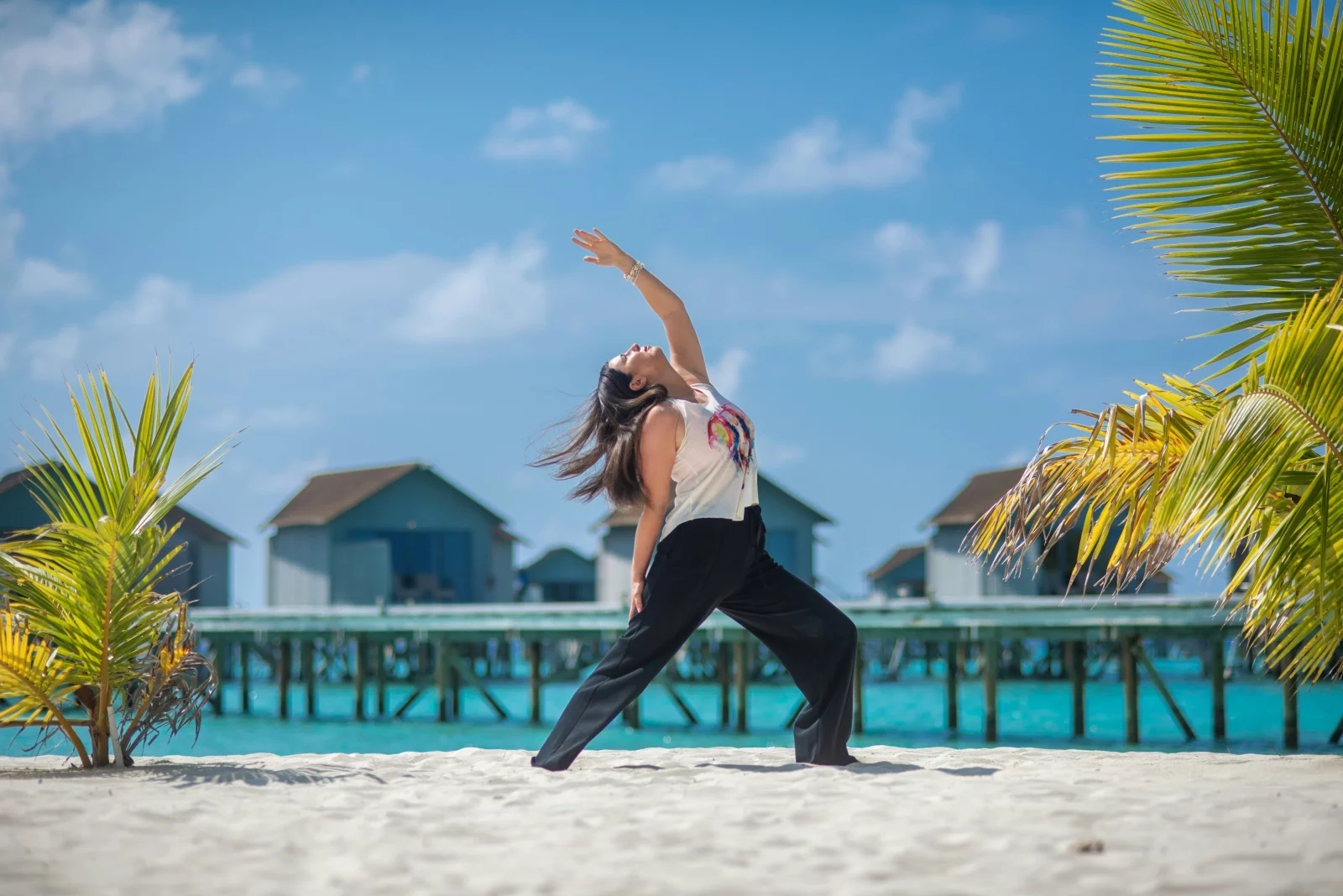
What Is a Yoga Retreat? And Why You Might Need One More Than You Think
There are times when you don't necessarily need a holiday. You need a break from the way you've been living.
Maybe you've been rushing from one responsibility to the next, eating meals between meetings, checking your phone before you've even got out of bed, or ending your evenings too tired to do much more than scroll. Nothing is necessarily wrong, but you can feel that you're running on empty.
This is where a yoga retreat can offer something different.
A yoga retreat is not simply a holiday with a few yoga classes added to the schedule. It is an opportunity to step away from your usual routine and give yourself some uninterrupted space to rest, move, breathe and reconnect with yourself. And you don't need to be an experienced yogi to enjoy one.
So, what exactly is a yoga retreat?
At its simplest, a yoga retreat is a trip centred around yoga, wellbeing and taking time for yourself. But beyond that, there is no single formula.
Some retreats are built around daily yoga and meditation, while others leave plenty of room for reading, walking, exploring, relaxing or simply doing nothing. Some have a quiet, introspective atmosphere; others are warm, social and full of conversation. You might practise yoga in the morning, enjoy a long breakfast, spend the afternoon outdoors and share dinner with people you've only just met. Or you might choose to spend much of your free time on your own.
That flexibility is part of what makes a retreat so appealing. There isn't one correct way to experience one.
The common thread is creating some distance from everyday life.
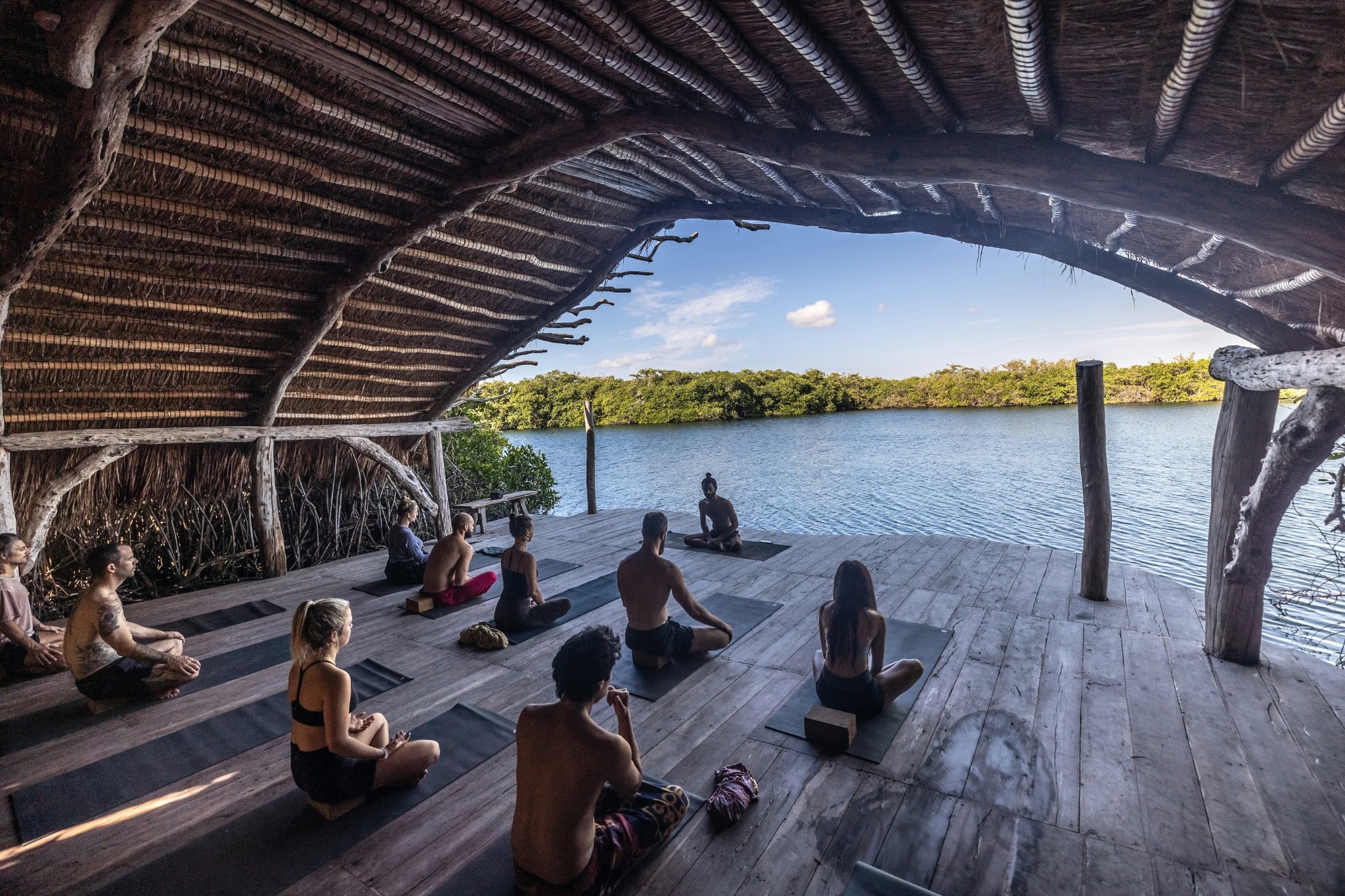
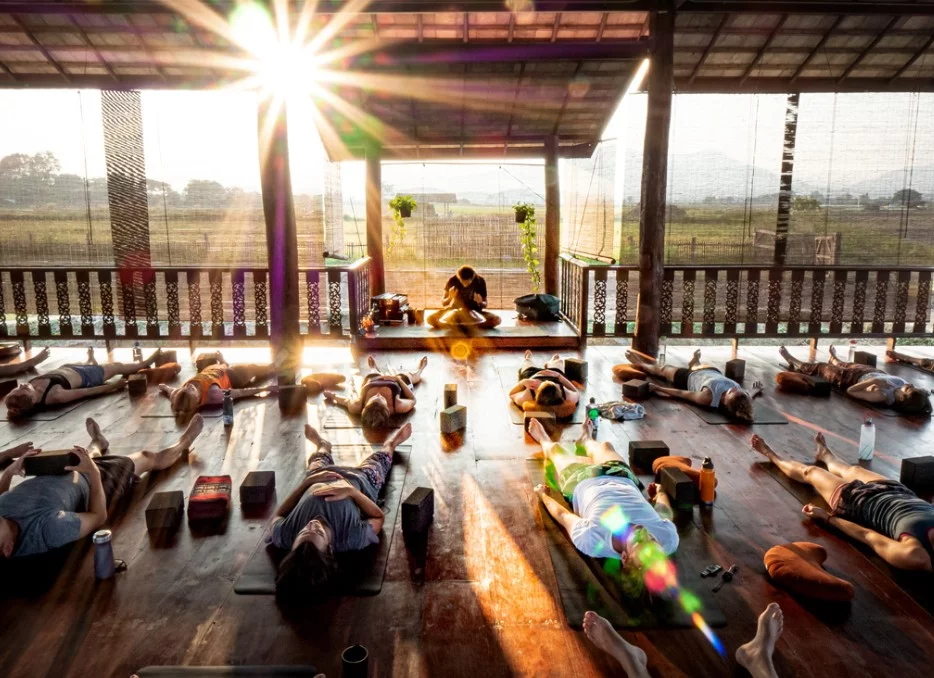
Photo by Woody Kelly on Unsplash
It's not really about becoming better at yoga
If you've never been on a yoga retreat before, you might picture a room full of incredibly flexible people effortlessly moving into poses you've never even heard of.
Thankfully, that's not what a yoga retreat has to be.
Yoga can be adapted to different bodies, ages, abilities and experience levels. Many retreats welcome complete beginners, and you don't need to be able to touch your toes, know Sanskrit or have an established yoga practice at home.
In fact, you may discover that the most valuable part of the experience has very little to do with how well you perform a particular pose.
Yoga gives you a reason to slow down and pay attention. You notice how your body feels. You notice your breathing. You become aware of tension you have been carrying in your shoulders, your jaw or your back without really thinking about it.
That awareness can be surprisingly powerful.
A chance to step out of your usual routine
One of the biggest differences between a yoga retreat and an ordinary holiday is the change of rhythm.
On a conventional trip, you might spend your days trying to see as much as possible. There are places to visit, restaurants to try, things to photograph and plans to organise. Even a relaxing holiday can sometimes become another project to manage.
A retreat can be much less about doing.
Your mornings may begin slowly. Meals might be enjoyed without rushing. There may be time between activities rather than a packed itinerary. You might find yourself going to bed earlier simply because you're no longer staying up to finish one more thing.
For a few days, you get to experience what life feels like when your schedule isn't constantly demanding your attention.
And sometimes that is exactly what your mind and body have been asking for.
The physical side: moving in a way that feels good
Yoga naturally brings a physical element to a retreat. Depending on the style and level, classes can involve stretching, strengthening, balance, mobility, breathing exercises and more dynamic movement. Over several days, you may begin to feel more comfortable in your body, not because you've transformed overnight, but because you've spent more time listening to it.
Many retreats also incorporate other forms of movement or time outdoors, from walking and hiking to swimming or other activities. The idea isn't necessarily to make every day physically demanding. It is to create an environment where movement feels natural rather than like another obligation.
You don't have to push yourself to exhaustion to feel like you've had a productive day.
Sometimes a gentle morning practice is enough.
But the mind needs a break too
We tend to think of rest as something physical. If you're tired, you sleep. If your muscles ache, you sit down. But mental exhaustion can be much harder to recognise.
Your body might be sitting still while your mind is working through tomorrow's to-do list, replaying yesterday's conversation, and remembering that you still need to answer three messages.
A retreat can interrupt that cycle.
With fewer everyday demands around you, your attention has somewhere else to go. You have time to breathe, journal, meditate, walk, or simply sit without feeling that every moment needs to be filled.
You may not return with all the answers to life's complicated questions. You might simply return feeling a little clearer.
And sometimes that's enough.
There is an emotional side to taking time for yourself
For many people, taking time for themselves can feel strangely difficult.
There is always someone who needs something. Work needs attention. Family needs attention. The house needs attention. Messages need answering. Eventually, looking after yourself becomes something you promise you'll get around to later.
A yoga retreat creates a different environment. For a few days, your own wellbeing becomes part of the plan rather than something squeezed into the gaps between everything else.
That can be more meaningful than it sounds.
You might realise just how tired you've been. You might remember things you enjoy that have quietly disappeared from your routine. You might find yourself thinking about a decision you've been avoiding, or simply notice that you feel happier when your days have a little more space in them.
None of this needs to be dramatic. A retreat doesn't have to change your life.
Sometimes looking after yourself simply means permitting yourself to stop for a while.
And you might be surprised by the people you meet
Yoga retreats can also be wonderfully social.
You may arrive alone and leave having shared meals, conversations and experiences with people from completely different backgrounds. There is something about experiencing a retreat together that can make connection feel easier. Everyone is there for their own reasons, but there is often a shared desire to slow down, try something new or simply get away for a few days.
Of course, you don't have to be social all the time.
A good retreat should leave room for both connection and solitude. You can join the group for dinner one evening and spend the next reading quietly by yourself. You can make new friends without feeling that you have to be “on” all the time.
That balance can be one of the most enjoyable parts of the experience.
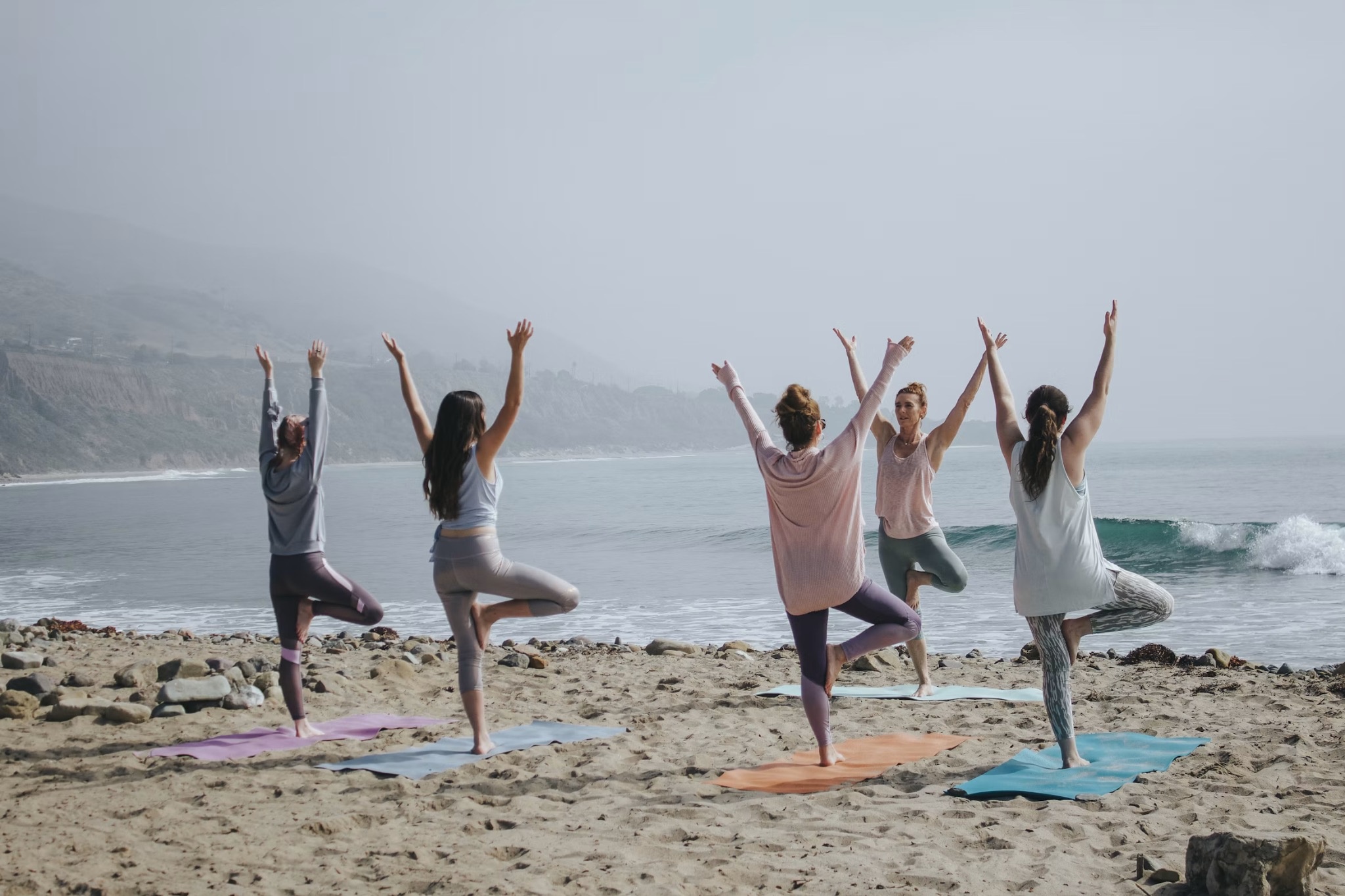
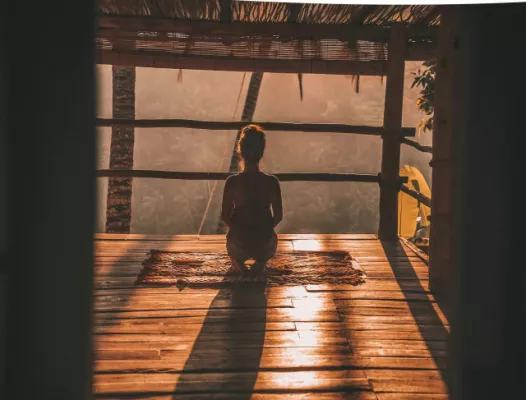
Photo by Kaylee Garrett on Unsplash
What should you expect from your first yoga retreat?
There is no universal yoga retreat experience, which is why it is worth looking carefully at what is actually included before booking.
Consider the style and level of yoga, how many classes take place each day, whether activities are optional, what type of accommodation is offered, and how much free time you'll have. Some retreats are highly structured, while others are intentionally relaxed.
Think about the atmosphere you want, too.
Would you prefer somewhere peaceful and intimate, or somewhere with plenty of opportunities to meet people? Do you want a retreat focused primarily on yoga, or would you enjoy combining yoga with nature, meditation, food, fitness, or other activities?
And perhaps most importantly, ask yourself what you actually need right now.
Not what sounds impressive. Not what you think you should be doing.
What would genuinely feel good?
You don't have to wait until you're burned out
A yoga retreat doesn't have to be a last resort.
You don't need to be completely exhausted, going through a major life change or searching for some profound personal transformation. You can simply want a few days that feel different.
You can want to move your body, spend more time outside, sleep a little better, meet new people or have breakfast without immediately thinking about everything you need to do afterwards.
You can want to reconnect with yourself before you lose touch completely.
Perhaps that is the real appeal of a yoga retreat.
It creates a small pause in a life that doesn't always leave much room for one.
And when you return home, the goal isn't necessarily to become a completely different person. Maybe you simply come back feeling more like yourself.
Is a yoga retreat right for you?
If you've been curious about yoga retreats but assumed they were only for experienced yogis, it's worth looking again.
A retreat can be as much about rest, curiosity and giving yourself space as it is about yoga. You don't need to arrive flexible. You don't need to know exactly what you're looking for. You don't even need to consider yourself a “yoga person”.
Sometimes, all you need is the feeling that you'd like to press pause for a little while.
And that can be a very good reason to go.